
Special-operation robots
From special-operation safety monitoring to embodied robots, AI moves from seeing risk to entering the site and doing the work.
Request a trialAll-terrain carrier
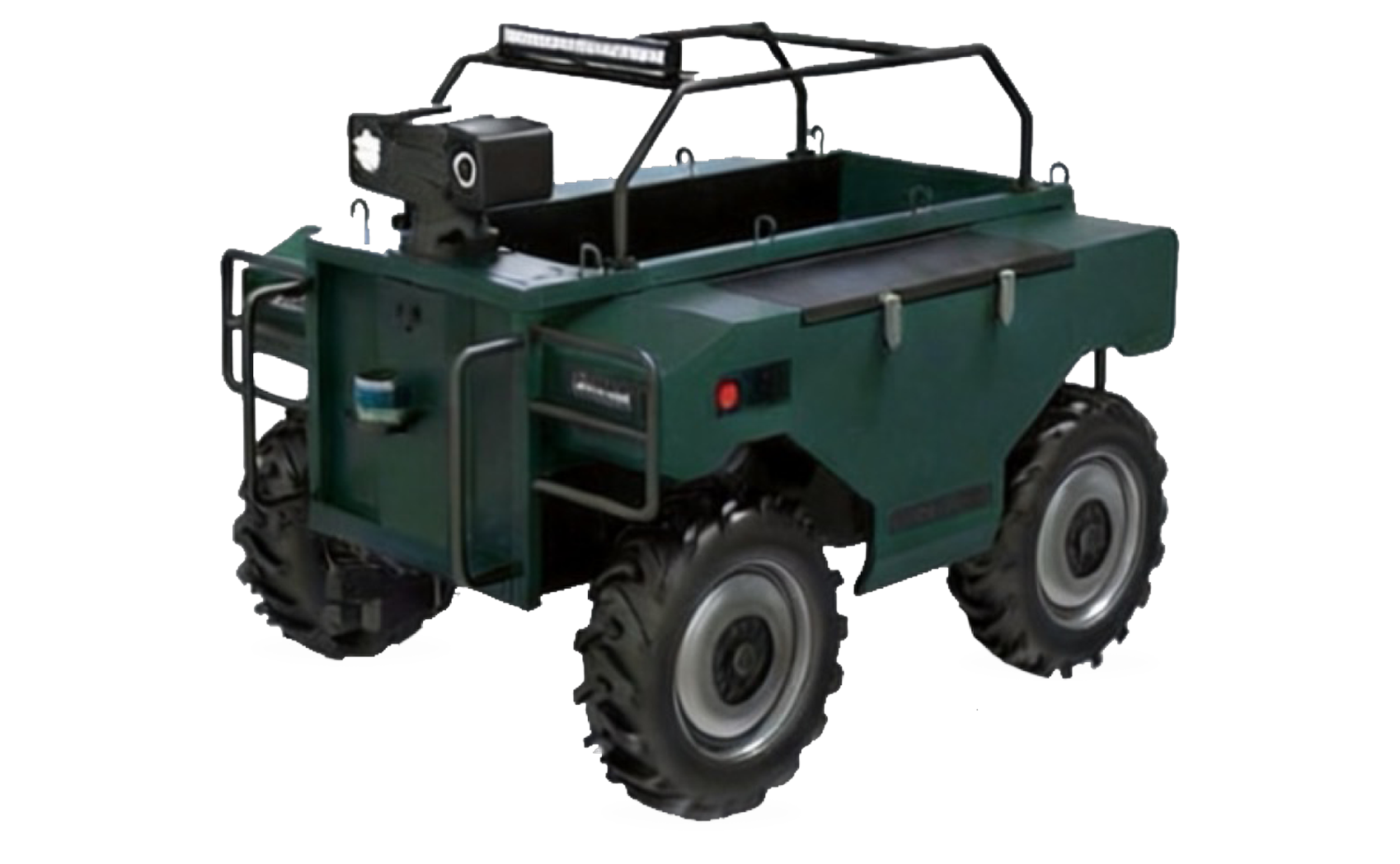

Independent suspension and chevron off-road tires. It holds mountain, mud, sand, steep slope, and gravel. Top speed 15 km/h, and 300 kg while climbing.
Payload 600 kg against a 300 kg vehicle. The bed is 1.2 m × 0.6 m × 0.5 m, for fire equipment, inspection gear, samples, and supplies.
A positioning algorithm follows from the front, side, or rear. Occlusion hold is at least 3 seconds in a mine and up to 5 seconds in forest. Start and stop stay in step.
Radio remote, path cruise, and unmanned driving, with a person able to take over first.
Night lighting and variable speed. Wi-Fi, mesh, 4G, and 5G keep commands moving in rubble and underground.
People do not carry the load. The vehicle follows, and supplies stay within reach.
Obstacle avoidance, staged recovery from being stuck, and one-touch cruise.
Optional gas detection, thermal imaging, and point-to-point transport modules.
Flexible all-surface robot
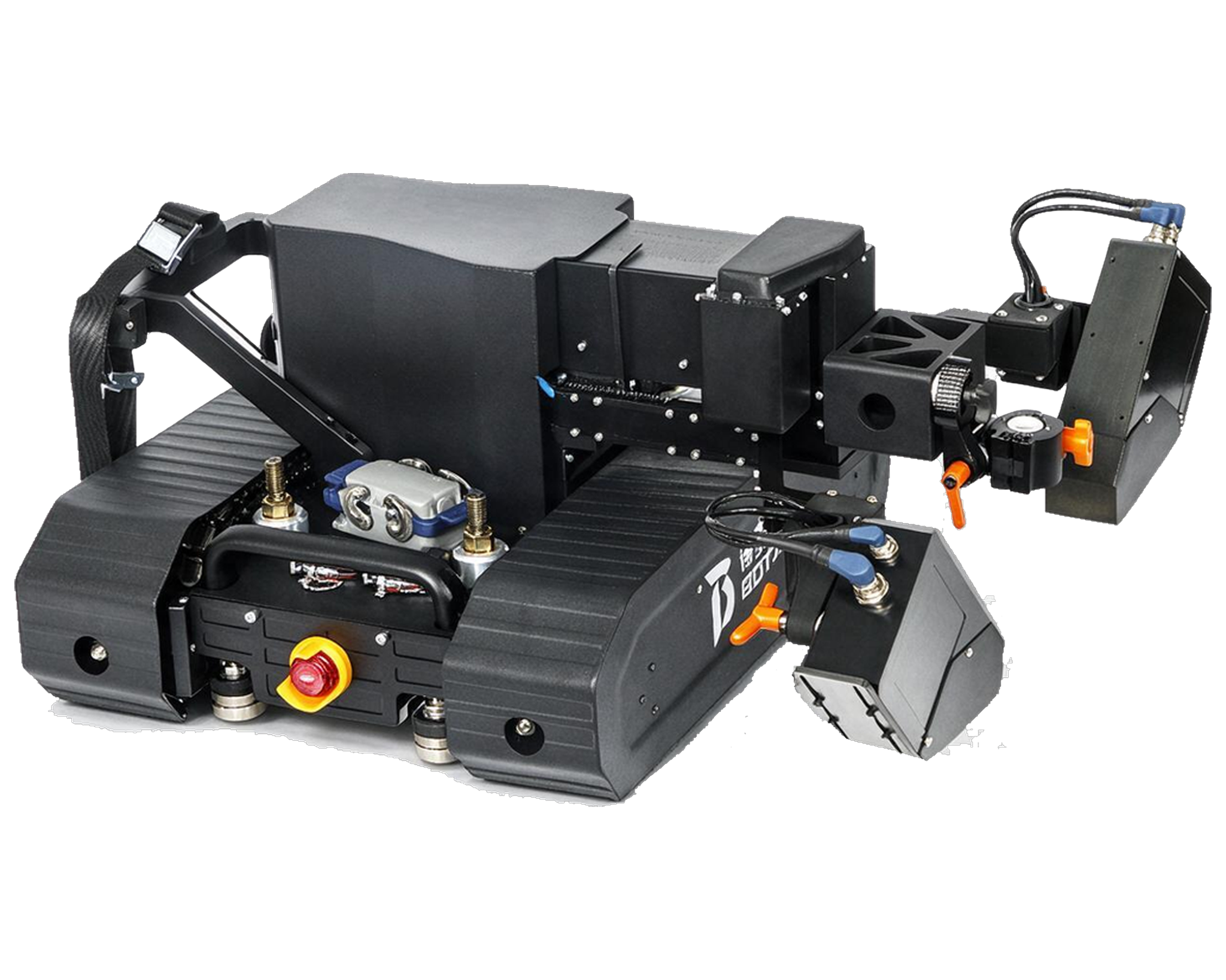

A flexible permanent-magnet chassis walks vertical, inverted, curved, and folded steel on tanks, boilers, towers, hulls, and pipes. Climb angle over 95°, obstacle height over 10 mm.
Carries thickness gauging, phased-array inspection, vision, water blasting, cleaning, welding, and coating modules.
Trained on 89,000 industrial defect samples. Detection at least 95%, location error ±1 mm, coverage up to 90%, with marks and records kept.
Remote control, path cruise, combined flight-and-climb work, and multi-robot teams. A person can stop the robot immediately.
Permanent magnets keep it attached if power fails, including dusty, wet, hot, and hazardous plants.
A cloud platform joins robot data with DCS data for corrosion, fatigue, and wear, and writes the inspection report.
No scaffold. Welding cycles about 40% shorter. Inspection about twice as fast as manual work, at about a quarter of the cost.
Tanks, boiler water walls, wind towers, hull plate, and industrial pipes.
Intelligent dredging robot
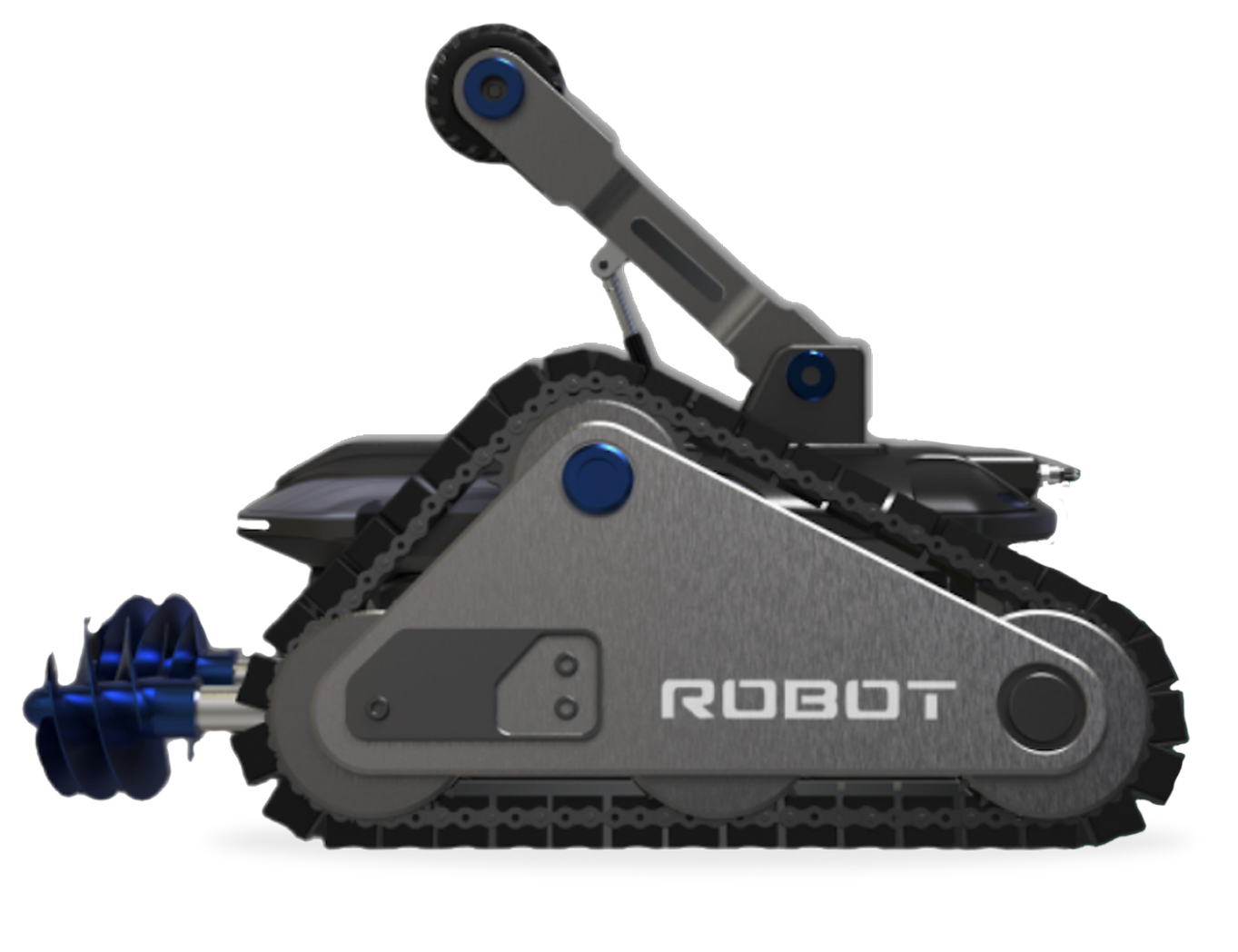

Body width under 600 mm, for DN700–2000 pipes, culverts, and older urban networks.
IP68, with a chassis built for longer underwater work.
Swing cutters in front and counter-rotating augers behind clear compacted silt and roots. A corrosion-resistant camera records video and defect images.
Tracks and electric drive for silt, compacted material, and gravel.
If the tilt passes the safe angle, the robot warns and stops. Speed, distance, and tilt can be shown.
The front tool swaps to a brush or nylon head. A high-pressure water option is available.
A handheld tablet, an optional edge ground station with video beyond 50 m, and Android control. People stay out of the confined space.
One entry clears the pipe and records its defects.